


Climate Change Causing More Change in Rainfall, Fiercer Typhoons, Scientists Say 

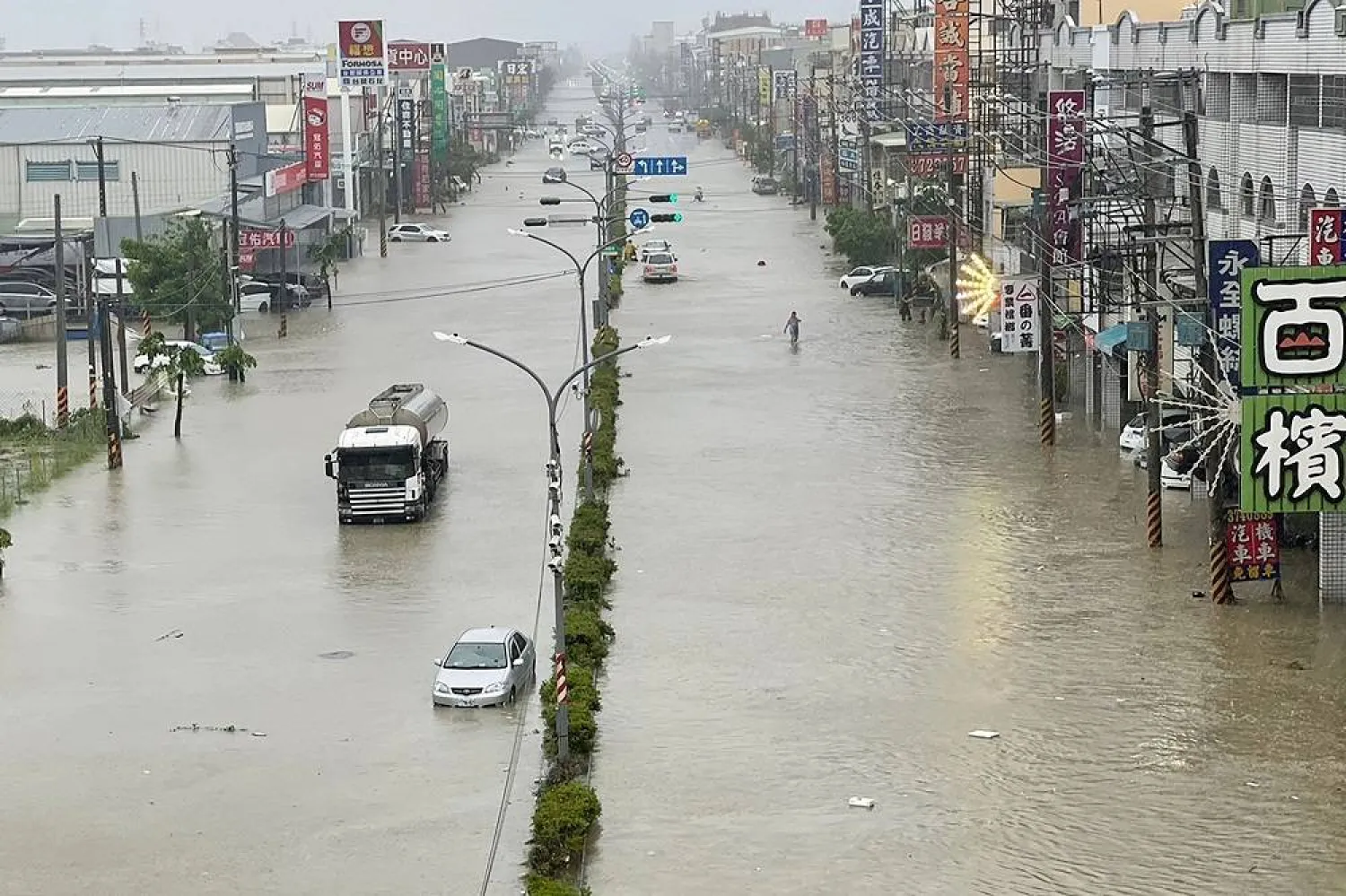
People and vehicles wade through the water along a street that was flooded by Typhoon Gaemi in Kaohsiung on July 25, 2024. (AFP)
TT

Climate Change Causing More Change in Rainfall, Fiercer Typhoons, Scientists Say 

People and vehicles wade through the water along a street that was flooded by Typhoon Gaemi in Kaohsiung on July 25, 2024. (AFP)

Climate change is driving changes in rainfall patterns across the world, scientists said in a paper published on Friday, which could also be intensifying typhoons and other tropical storms.

Taiwan, the Philippines and then China were lashed by the year's most powerful typhoon this week, with schools, businesses and financial markets shut as wind speeds surged up to 227 kph (141 mph). On China's eastern coast, hundreds of thousands of people were evacuated ahead of landfall on Thursday.

Stronger tropical storms are part of a wider phenomenon of weather extremes driven by higher temperatures, scientists say.

Researchers led by Zhang Wenxia at the China Academy of Sciences studied historical meteorological data and found about 75% of the world's land area had seen a rise in "precipitation variability" or wider swings between wet and dry weather.

Warming temperatures have enhanced the ability of the atmosphere to hold moisture, which is causing wider fluctuations in rainfall, the researchers said in a paper published by the Science journal.

"(Variability) has increased in most places, including Australia, which means rainier rain periods and drier dry periods," said Steven Sherwood, a scientist at the Climate Change Research Center at the University of New South Wales, who was not involved in the study.

"This is going to increase as global warming continues, enhancing the chances of droughts and/or floods."

FEWER, BUT MORE INTENSE, STORMS

Scientists believe that climate change is also reshaping the behavior of tropical storms, including typhoons, making them less frequent but more powerful.

"I believe higher water vapor in the atmosphere is the ultimate cause of all of these tendencies toward more extreme hydrologic phenomena," Sherwood told Reuters.

Typhoon Gaemi, which first made landfall in Taiwan on Wednesday, was the strongest to hit the island in eight years.

While it is difficult to attribute individual weather events to climate change, models predict that global warming makes typhoons stronger, said Sachie Kanada, a researcher at Japan's Nagoya University.

"In general, warmer sea surface temperature is a favorable condition for tropical cyclone development," she said.

In its "blue paper" on climate change published this month, China said the number of typhoons in the Northwest Pacific and South China Sea had declined significantly since the 1990s, but they were getting stronger.

Taiwan also said in its climate change report published in May that climate change was likely to reduce the overall number of typhoons in the region while making each one more intense.

The decrease in the number of typhoons is due to the uneven pattern of ocean warming, with temperatures rising faster in the western Pacific than the east, said Feng Xiangbo, a tropical cyclone research scientist at the University of Reading.

Water vapor capacity in the lower atmosphere is expected to rise by 7% for each 1 degree Celsius increase in temperatures, with tropical cyclone rainfall in the United States surging by as much as 40% for each single degree rise, he said.



Spain and Portugal Continue to Battle Storm Leonardo as New Storm Approaches

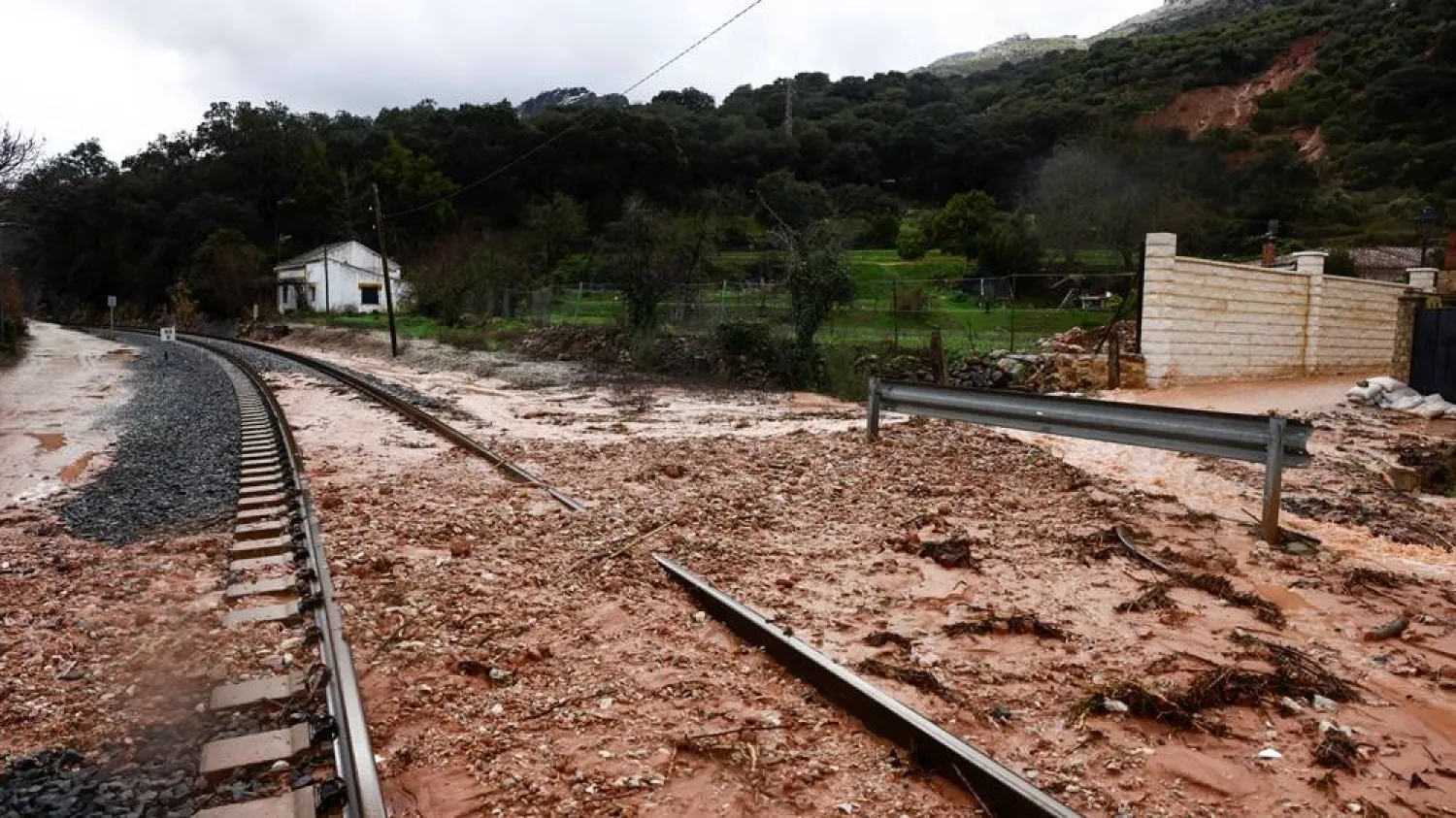
 A mountain landslide blocks railway tracks during heavy rains, as storm Leonardo hits parts of Spain, in Benaojan, Spain, February 6, 2026. (Reuters)
A mountain landslide blocks railway tracks during heavy rains, as storm Leonardo hits parts of Spain, in Benaojan, Spain, February 6, 2026. (Reuters)
TT

Spain and Portugal Continue to Battle Storm Leonardo as New Storm Approaches

 A mountain landslide blocks railway tracks during heavy rains, as storm Leonardo hits parts of Spain, in Benaojan, Spain, February 6, 2026. (Reuters)
A mountain landslide blocks railway tracks during heavy rains, as storm Leonardo hits parts of Spain, in Benaojan, Spain, February 6, 2026. (Reuters)

Storm Leonardo continued to batter the Iberian Peninsula on Friday, bringing floods and putting rivers at risk of bursting their banks while thousands of people were evacuated from their homes in Spain and Portugal.

In southern Spain's Andalusia region, some 7,000 people have had to leave their homes due to successive storms.

Among them were around 1,500 people ordered to evacuate the mountain village of Grazalema, where Andalusia's regional leader Juan Manuel Moreno warned that aquifers were "full to the brim with water,” and at risk of collapsing.

“It's raining on already saturated ground. The land is unable to drain," Moreno said. “We urge extreme caution. This is not over.”

Spanish police said Friday they had found a body located 1,000 meters (about 0.6 miles) away from where a woman had disappeared Wednesday after she fell into a river in Malaga province while trying to rescue her dog. Police said they had not yet identified the body, but believed it belonged to the 45-year-old woman.

Another storm front, Marta, was expected to arrive Saturday, with Spain's weather agency AEMET saying it would bring even more rain and heavy winds, including to areas already drenched by Storm Leonardo.

Marta is expected to affect Portugal, too.

Of particular concern was southern Spain's Guadalquivir River, which flows through Córdoba and Seville and eventually into the Atlantic Ocean, and whose water levels have dramatically risen in recent days.

Additional rain Saturday could leave many more homes at risk in Córdoba, local authorities warned.

In Portugal, parts of Alcacer do Sal were submerged after the Sado River overflowed, forcing residents to leave the city located 90 kilometers (about 56 miles) south of Lisbon.

Alerts were issued also for regions near the Tagus River due to rising water levels.

A separate storm in late January left a trail of destruction in Portugal, killing several people, according to Portuguese authorities.


AROYA Cruises Debuts Arabian Gulf Voyages for 2026

AROYA offers a curated experience featuring culturally inspired entertainment and diverse dining options - SPA
TT

AROYA Cruises Debuts Arabian Gulf Voyages for 2026

AROYA offers a curated experience featuring culturally inspired entertainment and diverse dining options - SPA

AROYA Cruises, a subsidiary of the PIF-owned Cruise Saudi, has officially launched its inaugural season in the Arabian Gulf.

Running from February 21 to May 8, the season marks a milestone in regional tourism by blending authentic Saudi hospitality with international maritime standards, SPA reported.

AROYA offers a curated experience featuring culturally inspired entertainment and diverse dining options.

The season is designed to provide guests with a dynamic way to explore the Gulf, setting a new benchmark for luxury travel that reflects the Kingdom's heritage on a global stage.


Snowstorm Brings Much of Denmark to a Halt

A car drives in heavy snow at Store Heddinge in South Zealand, Denmark, 05 February 2026.  EPA/Mads Claus Rasmussen
A car drives in heavy snow at Store Heddinge in South Zealand, Denmark, 05 February 2026. EPA/Mads Claus Rasmussen
TT

Snowstorm Brings Much of Denmark to a Halt

A car drives in heavy snow at Store Heddinge in South Zealand, Denmark, 05 February 2026.  EPA/Mads Claus Rasmussen
A car drives in heavy snow at Store Heddinge in South Zealand, Denmark, 05 February 2026. EPA/Mads Claus Rasmussen

Denmark authorities halted public transport, closed schools and cancelled flights on Friday as heavy snowfall blanketed much of the country.

The Nordic country's meteorological institute DMI warned that heavy snow would likely continue until Friday evening in the east, where the capital Copenhagen is located.

Police said people should avoid going outdoors unless necessary and stay indoors in the capital and the surrounding region.

Copenhagen's airport cancelled flights to Paris and Berlin and warned of "delay and cancellation risks because of snowy conditions." Many schools were closed.

In the second-largest city of Aarhus, bus services were cancelled.